Building a Futuristic Raspberry Pi Smart Vending Machine with Blockchain Crypto Payments
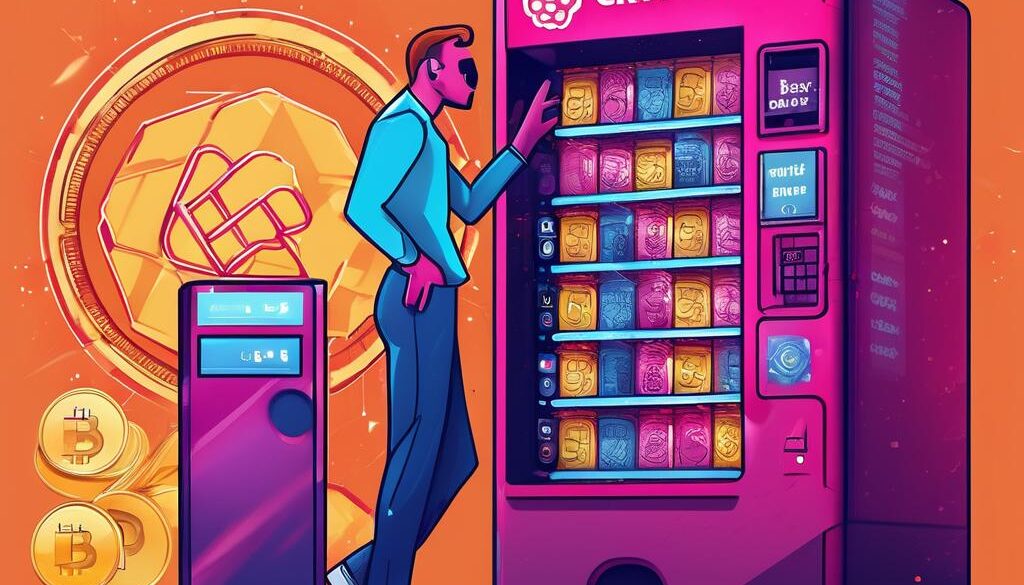
Imagine walking up to a vending machine that accepts crypto payments via a simple QR code scan. No coins, no cards—just fast, secure blockchain transactions. This is the future of vending, and it’s possible with a
Why Traditional Vending Machines Are Outdated
Vending machines have not changed much in decades. They use coins or bills, have clunky buttons, and offer no way to track sales or prevent fraud. Businesses lose money on jams, theft, and maintenance. Customers hate carrying cash and waiting in lines.
A smart vending machine solves these problems. It goes cashless, adds web ordering, and uses blockchain for transparent payments. With Raspberry Pi as the brain, you get a low-cost, powerful controller that handles everything from UI to hardware dispensing.
How the Works
The system is simple yet powerful. Users interact via phone and touchscreen, while the Pi manages verification and dispensing. Here are the four easy steps:
- QR Code Scan: A big QR code shows on the machine’s screen. User scans it with their phone. This opens a mobile web page for browsing products.
- Web Order and Payment: Select items, add to cart, and pay with blockchain crypto via a gateway like Budkoin or similar. Payment confirms instantly, generating a unique Order ID.
- Enter Order ID: Back at the machine, type the Order ID on the touchscreen. The Raspberry Pi checks it against the server database.
- Product Dispense: If valid, Pi sends a command via MDB protocol to the vending hardware. Your snack or drink drops out!
This flow keeps things secure and user-friendly. No internet needed at dispense time—just a quick verification.
Tech Stack: What Powers the System
Raspberry Pi is the star. Use a Pi 4 or 5 for smooth performance. It runs Linux and handles multiple tasks at once.
| Layer | Technology |
|---|---|
| On-Screen UI | Custom PyQt or Kivy interface for touch control |
| Backend | Node.js or Python Flask web app with API |
| Payment | Blockchain gateway (e.g., supports BTC, ETH, stablecoins) |
| Hardware Comm | MDB protocol over serial/USB |
| Platform | Raspberry Pi OS |
The Pi connects to a touchscreen LCD (7-10 inches) and the vending machine’s MDB port. No extra controllers needed—Pi does it all.
Key Challenges and How We Solved Them
1. Implementing MDB Protocol on Raspberry Pi
MDB (Multi-Drop Bus) is the standard for vending hardware. It’s timing-sensitive and uses serial communication. We wrote a Python library using pyserial to handle commands like “dispense slot 3” or “check inventory.”
import serial

ser = serial.Serial('/dev/ttyUSB0', 9600)
def send_mdb_command(cmd):
    ser.write(cmd.encode())
    response = ser.read(10)
    return response
Tip: Use a USB-to-serial adapter for reliable connection. Test timings with an oscilloscope if issues arise.
2. Securing Order IDs Against Fraud
Users enter IDs manually, so they must be unguessable. Solution: Generate cryptographically secure IDs (UUIDv4 + hash) on the server. Validate once via API, then mark as used. Expires in 10 minutes.
API endpoint example:
POST /verify-order
{
  "order_id": "abc123xyz",
  "machine_id": "pi-vend-001"
}
Response: { "valid": true, "product": "cola" }
3. Smooth UI on Limited Pi Hardware
Pi has modest CPU/GPU. We optimized with lightweight frameworks like Kivy. Preload assets, use vector graphics, and limit animations. Result: 60 FPS touch response even under load.
Benefits of Blockchain Payments in Vending
- Global Access: Accept crypto anywhere, no bank fees.
- Traceability: Every transaction on blockchain—audit-proof sales logs.
- Low Cost: Raspberry Pi setup under $300 + vending hardware.
- Scalable: Add multiple machines, central dashboard for inventory.
- Modern UX: Web ordering feels like shopping online.
Businesses save on cash handling and get real-time analytics. Customers love the speed and crypto convenience.
Real-World Deployment Tips
This isn’t theory—it’s deployed in production. Power the Pi with a UPS for outages. Use a 4G modem for always-online web app. Monitor via Telegram bots for alerts on low stock or errors.
Components list:
- Raspberry Pi 4/5
- 7″ Touchscreen
- Vending machine with MDB port
- USB Serial Adapter
- Case for outdoor use
Future Upgrades for Your
Take it further:
- Add UPI, NFC, or credit cards.
- AI inventory via camera (OpenCV on Pi).
- Remote updates over-the-air.
- Multi-currency crypto support.
Blockchain makes it future-proof as Web3 grows.
Conclusion: Start Building Today
The
Questions? Drop a comment below. Share your builds!